
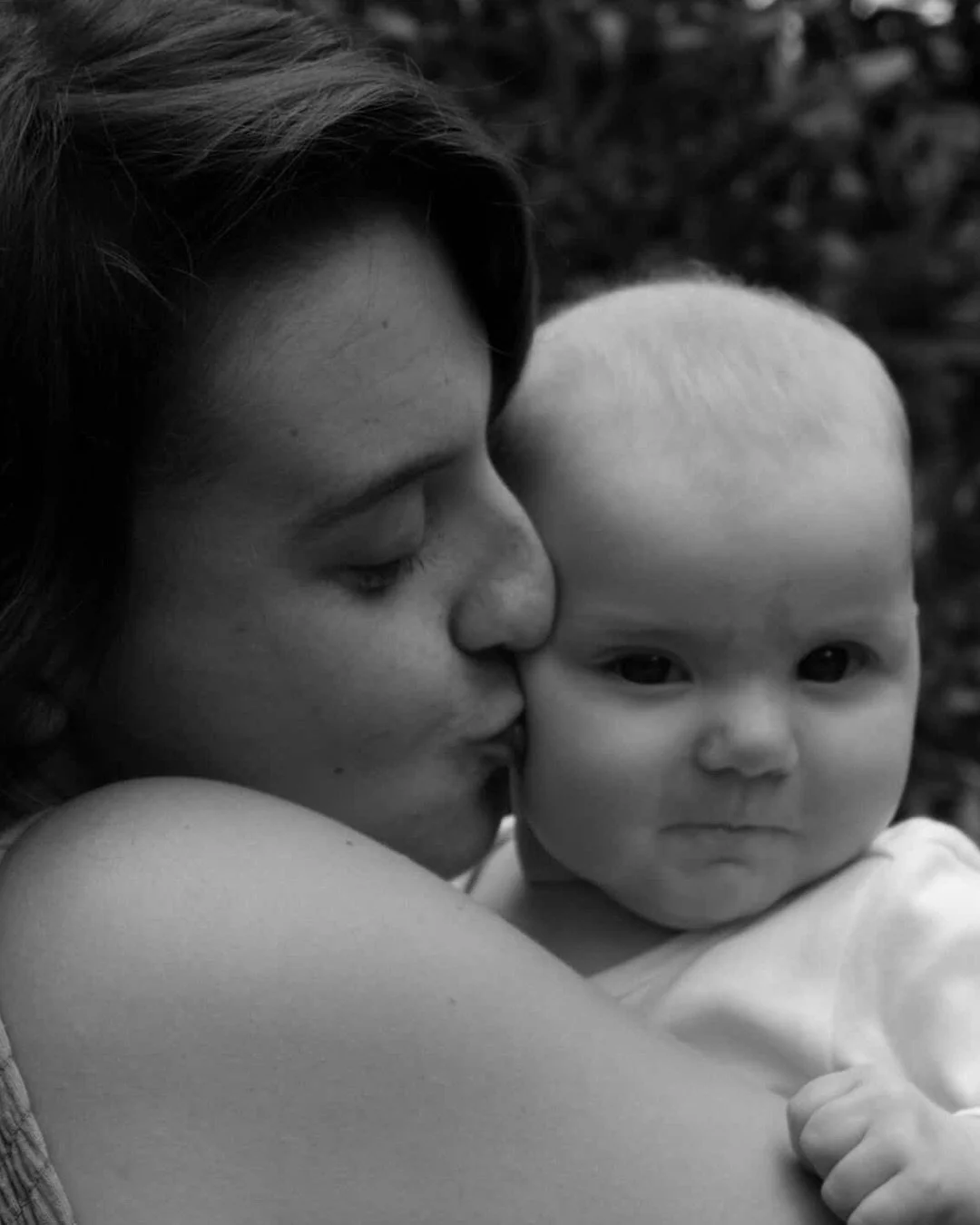
CW: This story includes pregnancy, medical and birth complications and NICU experience.
l have always been a sucker for a birth story, long before I was ever pregnant. When I found out I was pregnant, I self-enrolled in the continuity of care/group midwifery program at The Canberra Hospital (TCH) and was very determined to pursue a home birth.
At 12 weeks pregnant, I was paired with my beautiful midwife, Elke. She was able to offer me a home birth if everything continued to progress well throughout my pregnancy.
I found my first trimester very rough, but still enjoyable in its own way. From weeks 6 to 13, I experienced severe nausea and vomiting multiple times a day, along with extreme fatigue. I was essentially horizontal for weeks and lost 5kg during that time. My second trimester, however, was much easier and one that I truly enjoyed.
My husband Jerome and I were married in November 2024 and had planned our honeymoon to Japan for May–June 2025 to escape the Canberra cold. I found out I was pregnant in January 2024, and both my GP and midwife were comfortable with me travelling during my 20-something weeks of pregnancy, provided I completed my 20-week scan beforehand.
The day before we were due to fly to Japan, with all our bags packed, we attended our scan at the Canberra Fetal Assessment Unit (CFAU). I was nervous about the placement of my placenta and whether it might affect my home birth plans, but fortunately my placenta had moved to a favourable position. However, during this scan, our daughter was diagnosed with a congenital diaphragmatic hernia (CDH).
That day, we were given a pamphlet and some initial information by Mr Mary regarding the condition, survival rates, and next steps. In Australia, babies with CDH have a survival rate of approximately 40–50% with medical intervention. At the time of diagnosis, we did not know if our baby would make it to term, if there were additional genetic factors involved, or if we would be faced with the possibility of a medical termination.
Our honeymoon was immediately cancelled, our leave was changed to personal leave, and neither of us returned to work for three weeks. During that time, we had our first of many appointments with the Fetal Medicine Unit at TCH. We accessed extraordinary care, and we remain deeply grateful for our in utero diagnosis.
The first step was determining whether our daughter had a chance of surviving outside the womb. While in utero, babies do not rely on their lungs; however, after birth, babies with CDH can deteriorate rapidly due to breathing and feeding difficulties. To assess prognosis, clinicians measured the size of Sadie’s non-affected lung (her right lung) in relation to her head circumference. Based on these measurements, Sadie was given a remarkable 90% chance of survival.
With this information, we decided to continue the pregnancy and proceed with genetic testing, which required an amniocentesis. This procedure involved extracting amniotic fluid from my uterus. While uncomfortable, it was not painful, and Jerome was able to stay with me throughout. Emotionally, however, I found it very difficult to see the fluid in test tubes — I just wanted it back inside me with my daughter.
It took six weeks to receive all results, which confirmed that Sadie’s CDH was isolated, with no other genetic abnormalities. For the remainder of my pregnancy, I had 14 ultrasounds, one MRI, a consultation with a paediatric general surgeon, two neonatal consultations, a paediatric cardiology consultation with echocardiogram, and all routine pregnancy appointments alongside continued care with my midwife.
It was recommended that I book an induction at 39 weeks. This was not something I felt ready to agree to at that stage. I felt strongly connected to my baby and trusted that she would come when it was safest for her. I declined booking an induction at that time and felt fully supported by my medical team, my midwife, and my husband.
By 38 weeks, I was feeling physically uncomfortable, and to encourage labour naturally, I had several acupuncture sessions. At 39+2, I attended a routine scan and visited my midwife. We decided to do a stretch and sweep. To our surprise, my cervix was very favourable for a first pregnancy. After the sweep, I agreed to book an induction date for 41 weeks to satisfy medical planning.
The sweep was done around 2pm. That afternoon and evening, we cooked dinner, baked, and took our dog for a long walk. I didn’t sit down until bedtime, when I realised I’d been cramping on and off. Overnight, I woke several times, and during one bathroom visit I noticed I had lost my mucus plug. By 6am, I accepted that labour had likely begun. I messaged my midwife and tried to continue with the day as planned.
I initially told Jerome to go to work, but after a few surges in the shower, I asked him to stay home. He made me a big breakfast, and we took our dog for a walk. My midwife came by late morning and found I was 3cm dilated. As contractions were not yet strong or regular, she encouraged me to continue as normal.
That day was spent resting, eating, walking, watching TV, and pretending I wasn’t in labour. By around 9pm, things became more intense but manageable with a TENS machine, birth ball, and breathing techniques. Surges continued overnight, but by 3am I was exhausted and slept. When I woke at 7am, contractions had eased, and I felt discouraged. After breakfast (which I vomited), I went for a long 1.5-hour walk that restarted labour.
By late afternoon, my midwife assessed me again — I was now 7cm dilated, and it was time to head to hospital. We arrived to a beautiful room with a birthing pool. I used the pool for water therapy, knowing I wouldn’t be able to birth in it due to Sadie’s needs. I stayed in the pool for four hours, during which contractions intensified significantly.
After my waters were broken at 8cm, contractions became very intense. I tried gas and air but didn’t like it. Eventually, labour progressed to transition. Despite briefly asking for pain relief, I soon felt the urge to push. After working through a cervical lip, I began pushing in earnest.
After an hour of pushing, concerns were raised about Sadie’s heart rate not recovering well between contractions. The room filled with the neonatal team. Due to Sadie’s position and urgency, an episiotomy was recommended. After confirming with my midwife, I agreed, and Sadie was born within two pushes.
Sadie was placed on my chest for one minute. I lifted her, looked at her, and soaked in that moment. I had prepared mentally for this for months — knowing she would be taken quickly to save her life. While incredibly hard, I was deeply grateful for modern medicine and the care available to us.
After a brief but precious golden minute, Sadie was intubated, stabilised, and transferred to NICU. I was stitched, ate, showered, and walked to NICU within three hours. Seeing Sadie properly for the first time was magical. Despite the machines and environment, I felt calm and present.
I was discharged two days later but readmitted the following day due to an infected haematoma at my episiotomy site. Although physically and emotionally draining, I was grateful to remain close to Sadie during her critical time. I required surgery and five days of IV antibiotics. By around 10 days postpartum, I finally felt like myself again.
The weeks that followed in NICU are another story entirely.
What do you wish you knew before birth?
In hindsight, I invested a great deal of time in educating myself and preparing physically and medically for birth. What I wasn’t as prepared for was recovery after birth, particularly while navigating life in the NICU. I wish I had prioritised rest more in those early days.
If you could, would you do anything differently?
I wish I hadn’t held such negative thoughts about my episiotomy after birth. In the days following, I felt as though I hadn’t had a “natural birth.” After speaking with my midwife, she explained the statistics for first-time mothers, how much I had moved and laboured naturally, and that my birth was still a physiological birth with minimal intervention. That conversation helped me reframe my experience in a much more positive way.
What did your partner do that really helped during labour/birth?
My partner and support person helped keep me in “labour land.” I didn’t need to think about anything except labouring and breathing. He was incredible at offering water to my mouth, feeding me, and reminding me to rest and change positions.
What advice/honest truth would give a mama-to-be about birth?
I think every mama deserves a strong toolkit for birth and the intuitive knowledge to prepare for it. My toolkit was my breath, a TENS machine, water therapy, and soundtracks (Tracy Anderson and Pop That Mumma for hypnobirthing). These tools can support all types of births, including caesarean sections.
Having a birth map helped guide both me and my support people through my choices. One example was requesting that the blankets used to dry my baby stay with me after birth, so I could smell her while I expressed milk.